
A little curiosity. A whole new way to see.

There’s more to play.
Notice it.

Pick a card. Notice a moment. Wonder what it could mean. A practical deck that helps educators see more in children’s play.

StripeSecure checkout
Powered by Stripe
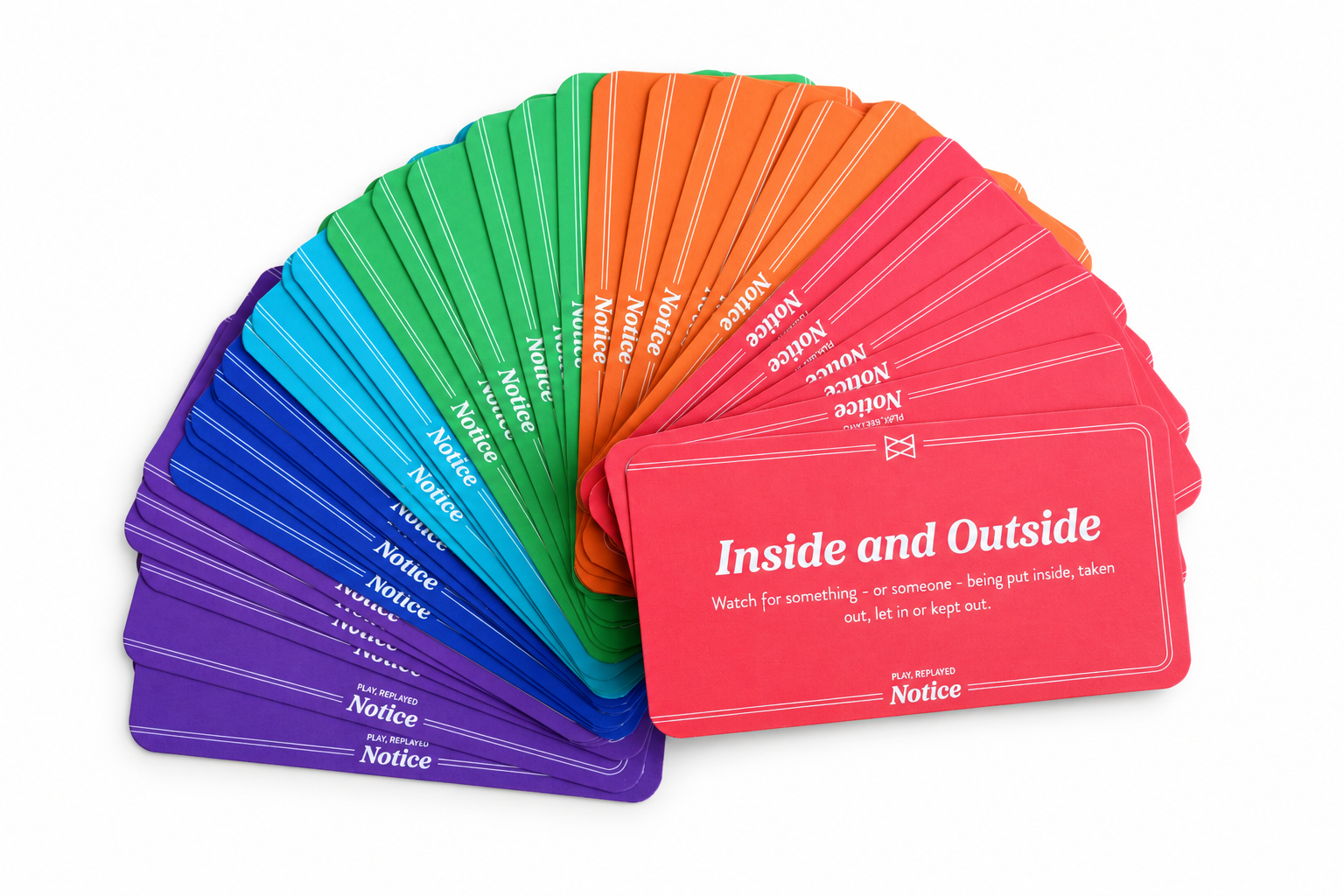
The complete Play, Replayed Notice deck fanned out on white, with Inside and Outside at the frontSmall cards. New possibilities.

How it works

See what one card can change.

Start with Notice. Watch the play unfold. Turn to Wonder when you’re ready to reflect.

Scroll to explore ↓
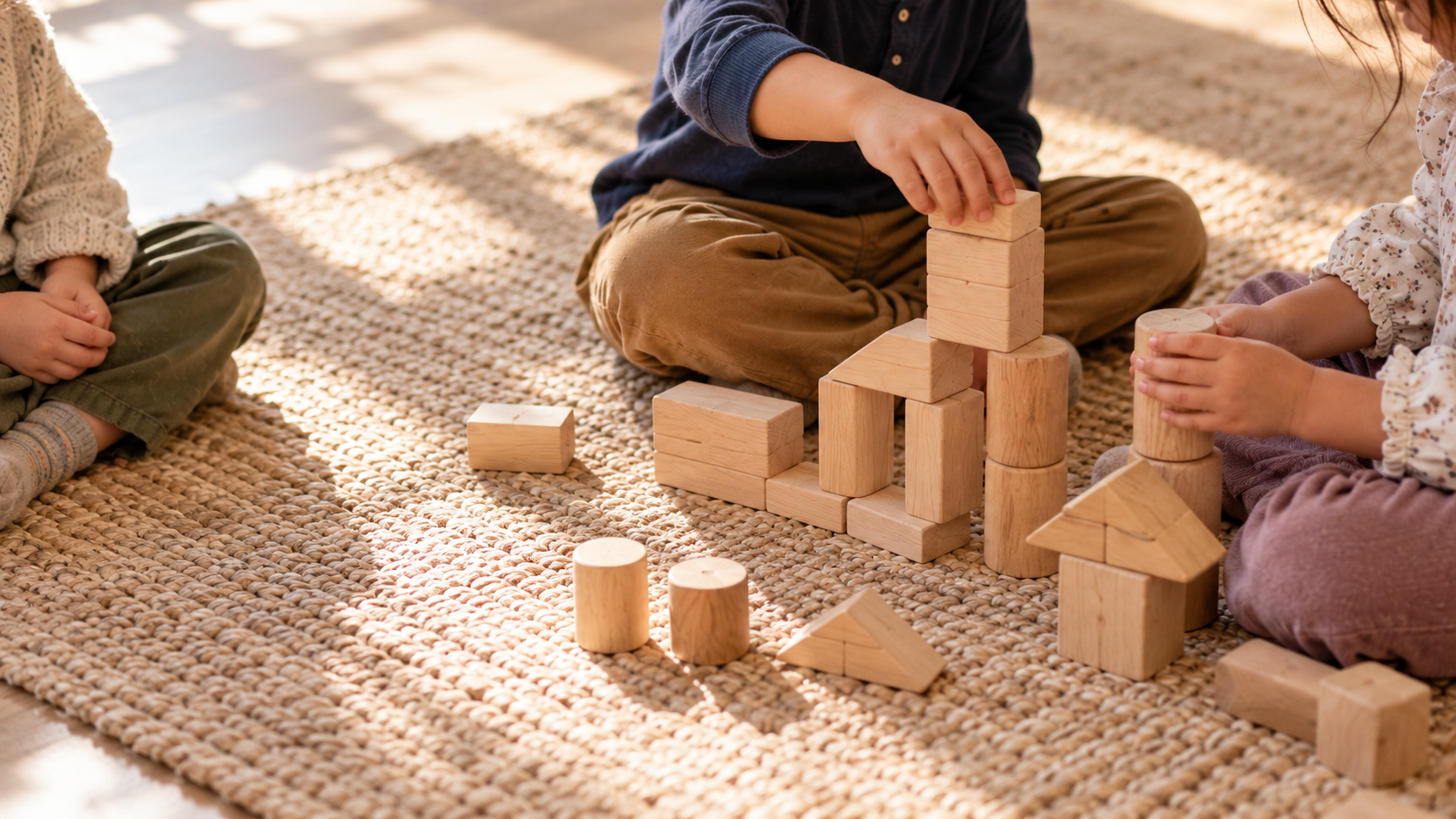
An illustrative play scene: a child sits quietly watching two other children build with wooden blocks.A close view of children’s hands building with wooden blocks; the observing child’s hands rest nearby.An illustrative play moment

01 / Before play

Pick one card.

Read only the Notice side. Carry the prompt with you, then let the play unfold.

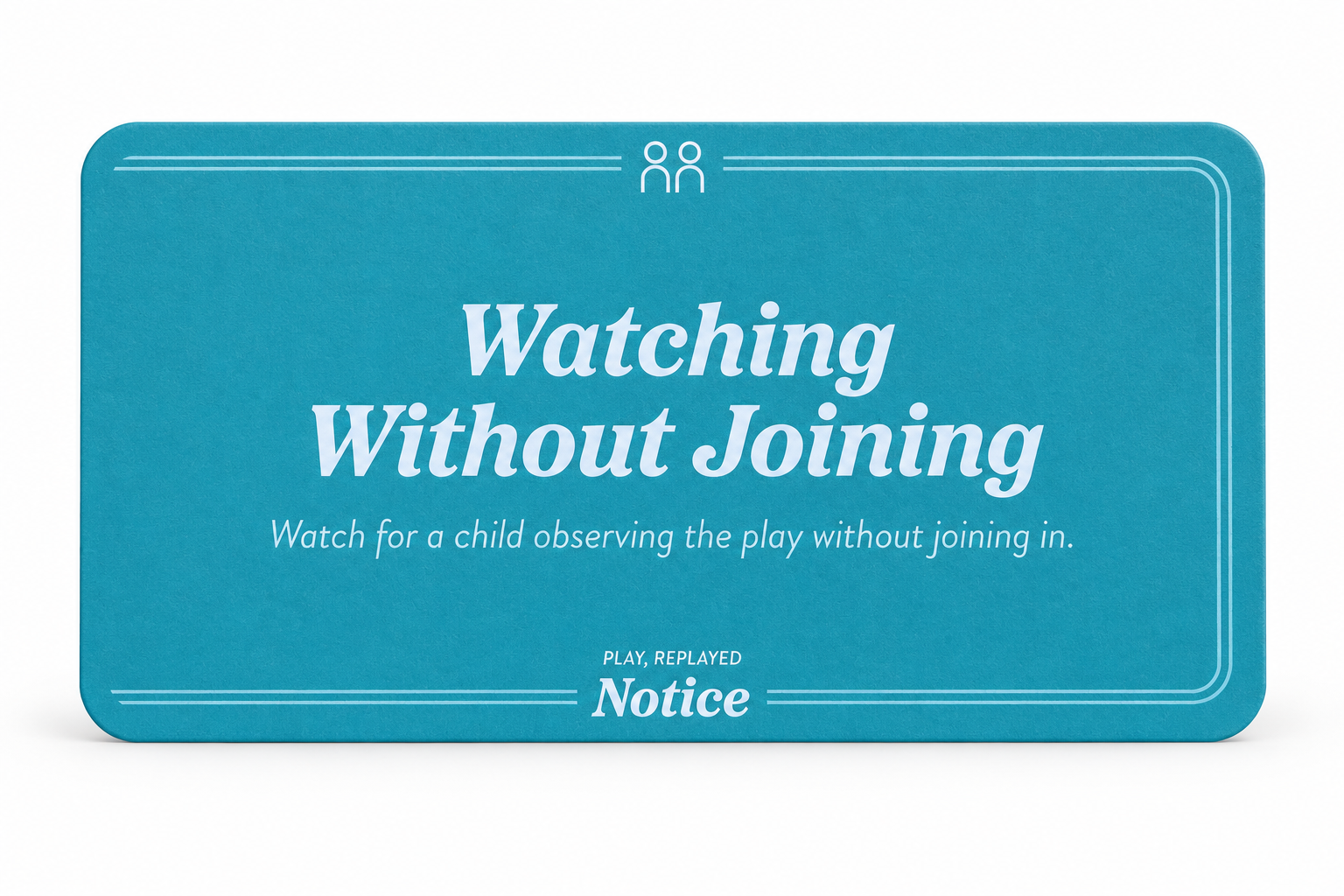
Watching Without Joining. Watch for a child observing the play without joining in. Play, Replayed — Notice.

1. Pick

Read only the Notice side: watch for a child observing the play without joining in.
2. Notice

The child watches the two builders. Their hands rest in their lap. Record the visible behaviour without deciding what it means.

3. Save

Example note: A child sat nearby, watching two children build. Their hands stayed in their lap.

4. Wonder

Later, turn the card over. Wonder: “What might watching tell the child about the play?” Stay open to more than one meaning.

Inside the deck

Small prompts. New perspectives.

42 cards to help you notice more in everyday play.
Watching Without Joining card
Watching Without Joining
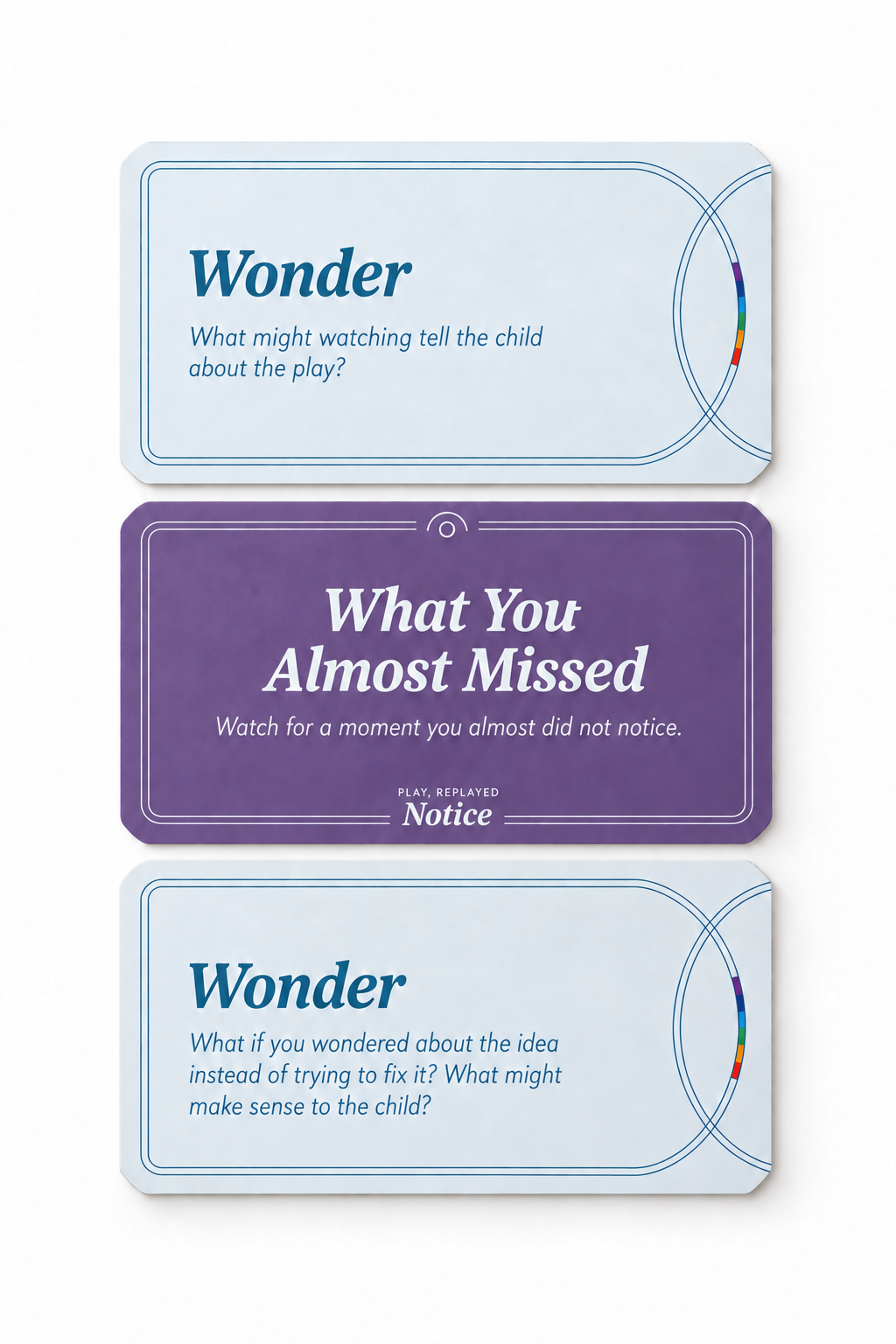
What You Almost Missed card
What You Almost Missed
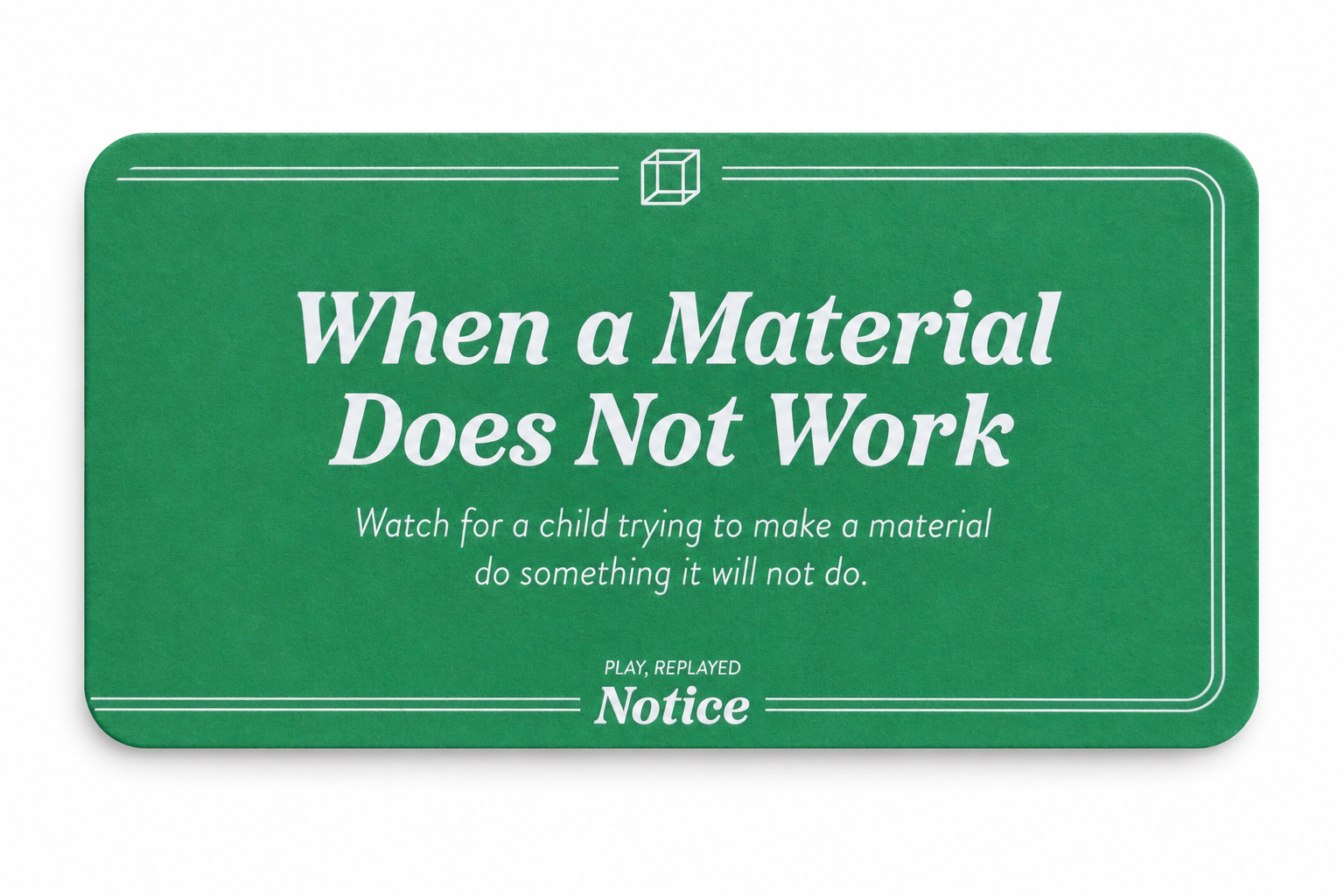
When a Material Does Not Work card
When a Material Does Not Work
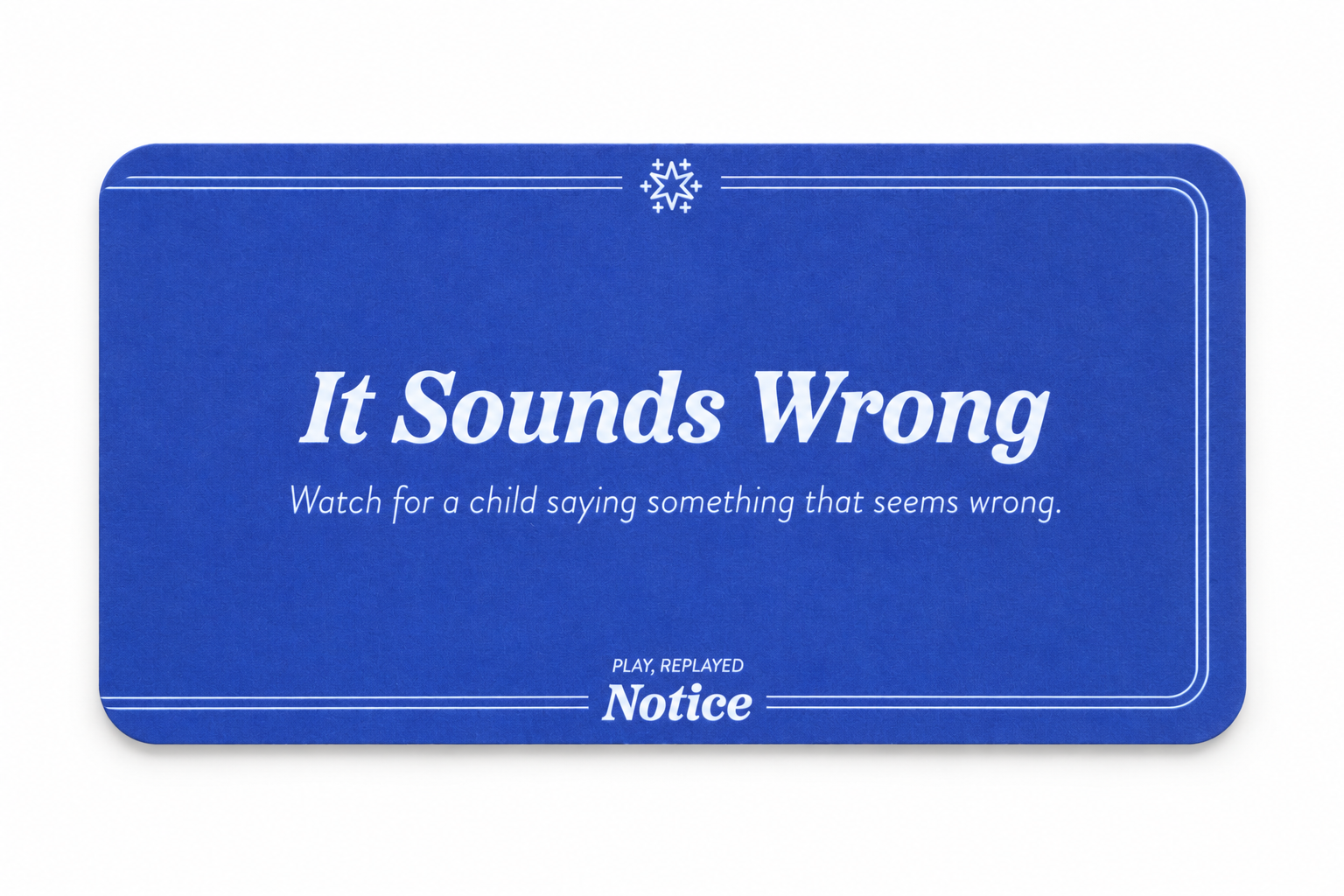
It Sounds Wrong card
It Sounds Wrong

What educators gain

More to notice.
More to share.

One prompt changes what you see, what you save and what you talk about.

An educator records an observation in a notebook while children build nearby.

Richer documentation

Watch with a prompt in mind and the details you save become specific, grounded in a real moment and worth returning to.

An educator quietly observes children exploring wooden blocks.

New ways to understand children’s play

Each card turns your attention to something you might otherwise pass by. The Wonder side opens the moment up instead of settling it.

Educators reflect together on observations and prompt cards.

More meaningful conversations with your team

Draw the same card together and compare what each of you noticed. Different perspectives give a team something real to talk about.

Start with one small moment

Noticing first.
Meaning later.

Let the next moment add to what you think.

StripeSecure checkout
Powered by Stripe

What is it

A small deck.
A different way to look.

Notice is a deck of 42 prompts for educators who want to understand more of children’s play. Each card offers a Notice prompt on one side and a Wonder question on the other.

Choose a card before play, watch for a moment that connects, and save what you see and hear. Later, turn the card over to reflect. There’s no score, no hidden meaning to uncover, and no right answer.

42 double-sided cards

Small prompts for noticing, with questions that help you revisit a moment with curiosity.

Six ways of looking

Explore Opposites, Actions, Materials, Roles, Ideas, and your own perspective as an Educator.

A foldout guide

Clear instructions, a worked example, quick ways to save observations, and ideas for using the deck on your own or with a team.

Experience behind every prompt

Built by an ECE.
Made for your everyday.

Created by Sarah, a certified early childhood educator with more than a decade of curriculum experience.

Meet the maker ↗

Sample testimonials · Placeholder copy

“One small prompt. A completely different way to see the play in front of me.”
Educator perspective Illustrative quote
“A simple starting point for the conversations we want to have as a team.”
Team perspective Illustrative quote

The Creator

Sarah, certified early childhood educator and founder of Bright Young Minds

Meet Sarah.

Certified early childhood educator · Owner of Bright Young Minds

Sarah is a play consultant, educator and mother of three. With more than a decade of experience creating curriculum, she brings a thoughtful, practical approach to supporting children’s learning through play.

Her work at Bright Young Minds centres on young children and the relationships around them — helping parents and educators bring more purpose, curiosity and connection to everyday play.

More about Sarah

FAQ

A little more to know.

Who is the Notice deck for?

Educators who want to look more closely at children’s play, make their documentation more meaningful and choose their next steps with greater purpose.

How much time does it take?

Begin with one card before play. Save a few details when a moment connects and come back to the Wonder side later. One card can stay with you for a day, a week or longer.

Can we use it as a team?

Yes. Try a Shared Draw: use the same card as a team, then compare what each person noticed. Different perspectives can open up new possibilities.

Is there a right answer?

No. There is no hidden, correct meaning. Try “I noticed…”, “Maybe…” or “What else could be true?” Keep watching and let the next moment add to — or change — what you think.
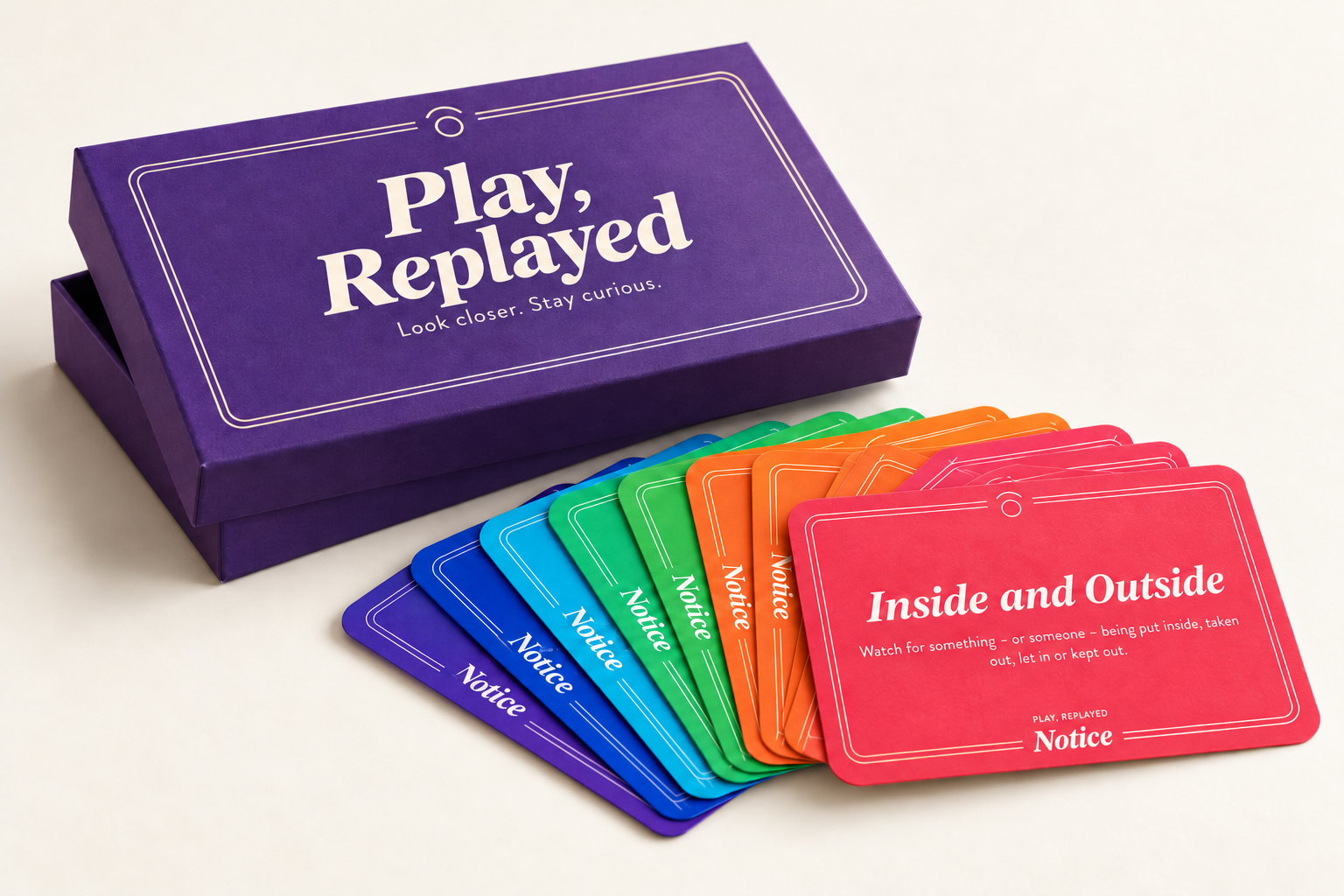
Packaging concept: a violet Play, Replayed box with a fan of colourful Notice cards
Packaging concept

A little curiosity to keep close

Your next moment
starts with Notice.

A practical deck for seeing more in the play already happening. Pick one card, stay curious, and see where it takes you.

A guide to noticing.

Why noticing matters

Children share ideas through their words, movements, choices and play. This deck helps you notice one moment and stay curious about what it might mean.

What adults notice shapes what happens next.

Looking closely can help you see patterns, understand what a child may be working on and choose what to offer with more purpose.

Small moments become useful information for planning, documentation and conversations with families.

Noticing is not one more task. It is a way to let the play already happening guide your teaching.

Start with one card

1. PICK one card before play begins.

2. READ only the Notice side.

3. WATCH with the prompt in mind. Do not force a moment to fit.

4. SAVE a few details when something connects.

5. WONDER later. Turn the card over and read the question.

Why wait? Reading the Wonder side later helps you notice freely instead of looking only for details that fit one idea.

There is no hidden, correct meaning. Stay open to more than one possibility.

Save the moment

Keep it quick. Choose the easiest way:

Jot one sentence on paper, a sticky note or in a notebook.

Write a few words on a whiteboard. Take a photo before you erase it.

Speak a short voice note into your phone.

Type one sentence on your phone or tablet.

Take a photo, if your setting and permissions allow it.

First, record what you saw and heard: What did the child do or say? What happened just before or after?

Wonder about the meaning later.

See it in action

Card 15: When a Material Does Not Work

Notice: Watch for a child trying to make a material do something it will not do.

Moment: Maya pushed a cardboard tube into play dough to make a tower. The tube bent. She turned it upside down, added another tube and said, “Stay.”

Save it: 10:20 — Maya tried three ways to make the cardboard tube stand. It bent. She said, “Stay.”

Later, Wonder: What might the child discover when the material does something unexpected?

Maybe Maya is noticing strength, shape or balance. Maybe something else matters more. Keep watching.

Stay curious

Wondering is not guessing what a child thinks. It is making room for more than one meaning.

Helpful ways to begin: I noticed… Maybe… I wonder if… What else could be true?

What next? Keep watching, save another moment, offer more time or materials, ask a simple question, or share what you noticed.

Or do nothing yet.

Let the next moment add to—or change—what you think.

Play, Replayed — Notice

A practical deck for educators who want to see more in children’s play and teach with greater purpose.

No extra prep. No perfect notes. No right answer.

Look closer. Understand more. Choose what comes next with purpose.

Six ways to notice

The lenses are different ways of looking. They are not answers.

Opposites: Notice when two different things come together in play.

Actions: Notice what children keep doing or begin to change.

Materials: Notice how children choose, use and change materials.

Roles: Notice how children join, lead, follow, copy or create roles.

Ideas: Notice what children may be thinking or trying to understand.

Educator: Notice how your thoughts, feelings and choices shape what you see.

What changes for you

Noticing is a skill. The more you practise it, the more useful it becomes.

You see patterns, not only single moments.

You gain a clearer sense of what may matter to a child.

You choose materials, questions and next steps with more purpose.

Your documentation becomes more meaningful and easier to write.

You explain children’s learning to families and your team with more confidence.

Better noticing supports better decisions. Better decisions strengthen your teaching.

You do not need to create more play. Begin by seeing more in the play already happening.

Ways to draw

Morning Draw: Choose one card for the day.

Shared Draw: Use the same card as a team. Compare what each person noticed.

Three-Card Week: Choose two cards from any lens and one Educator card. Carry all three for a week.

Keep exploring

Focus Draw: Choose an idea or question that keeps appearing in the play. Draw a card to look at it in a new way.

End-of-Week Draw: Choose the card that most changed what you saw. Save that moment.

Your Way: What other ways could you or your team use the cards?

One card is enough. Stay with it for a day, a week or as long as it helps you see more.